Monday, May 26, 2014

The Longest Ride: Theme and Characterization

      Sometimes, I just decide to pick up the most random books and start reading them. This time, I've chosen the book The Longest Ride by Nicholas Sparks. This is actually my first time reading a Nicholas Sparks novel. If you didn't know earlier, they are usually full of romance and all that mushy gushy stuff. Well, that's what I originally thought as well. But as I started reading this particular novel, that's not what it's all about, at least yet.
      For a brief synopsis of what I've read so far: There is an old man by the name of Ira who is currently stuck in his car during a severe snowstorm. He is recalling all of his memories while in wait of rescue with his wife, whom he is hallucinating an image of as she is already dead. Then, the book completely changes perspectives over to a college senior named Sophia who is just getting over a really bad breakup with her old boyfriend. She is in the process of befriending a bull rider whose show she saw at her pity party thrown by her sorority sisters.
      A theme I'm seeing so far is moving on, at least with Sophia. After a really violent encounter with her ex-boyfriend Brian, she is talking to new people like Luke, the bull rider whom I mentioned earlier. However, I'm seeing the exact opposite theme with Ira. He is reliving his past as opposed to moving on. He is battling so many illnesses and ailments and still he's refusing to die. A line from the book that shows this is:
"It's snowing and people are already driving slowly. Surely someone's going to find me. They have to find me. Right?"
This line shows that he's in denial that he can die despite being in a snowstorm at his age battling as many illnesses as he is.
    Ira is a very interesting character with an interesting background. I haven't really gotten to know him as a person yet, but I know his background. The only thing I know about his personality right now is that he's a fighter, and he really doesn't want to die. This is a pretty important character trait but I'm sure there is more to him. His background is that his family was in the Holocaust, but that they were able to come to America quickly enough to survive. His wife's family was in a similar situation, except she lost a lot of family members in the Holocaust.
   I feel like I've learned more about Sophia as a person than I have about Ira. She is a sweet, modest person from the voice the author incorporates about her. Her background is very normal as well, but she has a big heart. Her family isn't very affluent and she is in college based solely off of merit.
   From reading the back cover of the book, I know that Ira's and Sophia's paths are going to cross at some point, but my main question is: How? I'm excited to keep reading and find out what'll happen next!

Monday, May 12, 2014

The Da Vinci Code: About the Author

        I am officially infatuated with Dan Brown's writing. His writing is making me increasingly curious about where he gets all the facts in his books from. Some of the most random stuff is incorporated into The Da Vinci Code, and I would imagine that it takes some legit, hardcore research in order to intertwine successfully into his novels. So here I present to you: Dan Brown.
        Brown was born in 1964 and is the oldest of three siblings. His father was a math teacher and his mother was a church organist. As a child, he was exposed to many different types of puzzles and codes. He went on scavenger hunts created by his parents to find his presents on Christmas morning. One of the scavenger hunts between Sophie Neveu and Jacques Sauniere in The Da Vinci Code was inspired by a scavenger hunt that Brown went on as a kid.
        Dan Brown studied art history at the University of Seville in Spain. He uses a lot of his knowledge in his novels. In fact, he spent an entire year researching before writing The Da Vinci Code.
        Brown's first three books didn't have much success. His fourth, however, became a bestseller and is now known as one of the most popular books of all time. This book was none other than The Da Vinci Code. It was a springboard for his success. Afterwards, he wrote The Lost Symbol and Inferno, both of which became bestsellers in no time.
        Two of his novels have been made into major films. The Da Vinci Code, in fact, was the second highest grossing movie of 2006, but got many negative reviews. Angels and Demons, another Robert Langdon book, was also made into a movie. Its reviews fared better than those of The Da Vinci Code, but it didn't get the same amount of sales. His latest book-made-into-a-movie is going to be The Lost Symbol, another Robert Langdon novel.
         For those of you who aspire to become writers like Dan Brown, check out the video below:


Tuesday, April 22, 2014

The Da Vinci Code: The Maze of Cryptology

     I have recently been immersed in Dan Brown's world famous novel: The Da Vinci Code. The book is amazing. After each turn of a page, I crave for more mystery, suspense, and thrills. The book follows a suspenseful plot line and Brown manages to keep you reading for hours at a time. He also incorporates some very interesting facts about Christianity and Catholicism that you would never imagine and he also intertwines those facts with the gripping story line.
    The book starts out with the murder of a man by the name of Jacques Sauniere at the world famous Louvre Museum. Harvard professor of cryptology and symbology Robert Langdon is on a visit to Paris for conferences and is quickly notified by the French police to come to the scene of the crime. After Langdon sees the position of Sauniere's dead body, he quickly realizes that Sauniere is trying to send a message to somebody about his murder. Sauniere's body is arranged as Da Vinci's famous Vitruvian Man.
     A French police named Sophie Neveu is also called to the scene of the crime. Neveu secretly informs Langdon that she is Sauniere's granddaughter and that Sauniere had left a message in invisible ink  around his body before the French police erased it. Sophie has cut off all ties with her grandfather for the past ten years for a reason still unclear to me. The message had told "P.S.", which was Sophie's nickname, to find Langdon. She also tells him that the message was taken differently by the French police, who think that Landon has murdered Sauniere because the end of the message reads "P.S. Find Robert Langdon". As soon as Sophie discloses this information to Langdon, they both find themselves on a chase to solve the mystery of Sauniere's murder before getting caught. Along the way, they find that Sauniere was the Grand Master of a society called the Priory of Sion, which has a precious, guarded keystone. The keystone is rumored to have the path to the sought after Holy Grail.
    Sophie and Langdon are taken on a wild journey full of secret messages, cryptology, and secret symbols. Sauniere has left an elaborate plan before his untimely death for Sophie to find out all the secrets of the Priory of Sion after staying out of touch for so long. The reader is taken on the journey with them. I find myself gasping every time Langdon and Sophie figure out a new clue, because I realize how well thought out everything is.
     Brown's writing style includes a lot of imagery, which builds up the edge-of-your-seat suspense even more. An example of a line with a lot of imagery is:
       "He was broad and tall, with ghost-pale skin and thinning white hair. His irises were pink with dark red pupils."
This line gives a vivid image in the reader's mind and has a chilling effect.
     The reader is aware of a lot more information than Langdon and Sophie. Sauniere was murdered by a man named Silas from Opus Dei, another secret society that is after the keystone, but Sophie and Langdon don't know any of that. The chapters alternate between three perspectives. Sophie and Langdon, Silas, and Bishop Manuel Aringarosa, who is also in a high position at Opus Dei. The alternating of perspectives builds the suspense more because I, as a reader, get very anxious when all three perspectives don't know what each other is doing. That really bothers me, in a good way, and it is what keeps me reading, too. I am dying of anticipation to know what'll happen next in the book!

Krista Ramsey

    The column "Locking Into the Magic of Legos" is about the benefits of little kids playing with Legos regularly. it's also about how Legos spark creativity in young children.     
                The column can be found here: http://www.cincinnati.com/story/opinion/columnists/krista-ramsey/2014/02/15/krista-locking-into-the-magic-of-legos/5521245/    
     The best line from this column is, "Meanwhile, a narrative is being constructed along with an object. Indiana Jones and the Kingdom of the Crystal Skull Jungle Duel can, with a little imagination, turn into sword-training for a ninja or a backyard sleepout with giant ants."     
     This line compares a Lego masterpiece to a narrative. It gives an example of creativity that can be demonstrated by Legos to the reader. This helps Ramsey make her point more clear. She uses informal diction because she is talking about little kids and that will connect with them more. Also, the long and involved sentence helps with the "transforming" theme of the sentence, where it transforms Indiana Jones into sword-training for a ninja or a backyard sleepout. If they were two separate sentences, they wouldn't have the same effect on the reader.      
      Ramsey's writing style is casual and relatable. Her columns are mostly to inform her readers of certain facts, events, etc. She doesn't use too much elevated diction but her writing is still very well crafted. She uses a conversational tone in order to connect with her readers. An example of her conversational tone is in the column "Locking Into the Magic of Legos" where she says, "That's because kids are off the clock with Legos. They're in a world beyond learning objectives and select soccer, safely out of reach of arranged play dates and online language programs." The phrase "off the clock" comes off as conversational dialogue. An example of her casual diction is in the column "Super Bowl QBs Score Points for Great Style" when it says, "The amazing thing isn’t that two super jocks know how to dress well, but that they actually seem to want to." The phrase "super jocks" is casual diction. An example of her giving specific facts to her reader is in the column "For Better Vision, Kids Need Time Outdoors" where it says, "Meanwhile, the American Optometric Association says young users of hand-held devices should follow a 20-20-20 rule – every 20 minutes, take a 20 second break and view something at least 20 feet away – and should also increase the font size on their device rather than bringing it closer to their eyes." This line gives a fact, but the fact is also relatable and applicable to all readers.      
           Three questions I have for Ramsey are:      
             When did you develop a passion for writing?      
             Where do you get ideas for your columns?      
             What is your favorite topic/subject to write about?

Wednesday, April 9, 2014

An Abundance of Katherines: Review and Characterization

        An Abundance of Katherines by John Green was by far one of the best books I've read. It is a feel-good realistic fiction novel that can teach us all a few good lessons. John Green's writing style, however, was what intrigued me the most and made the novel so memorable. Green uses a very comedic tone in his writing and provides a very light-hearted feel. For example, he uses certain phrases that he thinks the reader should understand differently than what they actually mean and puts many footnotes at the bottom of that page for the reader to understand the message he was trying to convey. They were often very silly, but they definitely helped. Along with a comedic tone, he also offers a very "dorky" tone in the book; he incorporated some crazy trivia that nobody would really know unless they spent many hours researching fun facts.
       Now for a brief summary of the book. Colin Singleton is a teen prodigy, as he calls himself, that has been dumped by girls named Katherine 19 times. That's right, NINETEEN TIMES! It's totally insane, but true. John Green himself has been dumped 53 times, so I guess that's where he got this strange idea from. Anyways, Colin is eventually so sick and tired of breakups that him and his best friend Hassan, decide to go on a road trip for their summer break. Their road trip takes them to the smal
l town of Gutshot, Tennessee where they are initially reeled in because the town claims to be the home of the grave of Archduke Franz Ferdinand. They go there and befriend a girl named Lindsey Lee Wells, who's mom, Hollis, eventually gives them both jobs and a place to stay for the summer. 
      Meanwhile, Colin, who really wants to accomplish something brilliant in life and have a "Eureka" moment and "matter" in the world, starts to work on a theorem that predicts any couple's relationship called the "Theorem of Underlying Katherine Probability". While in Gutshot, Colin and Hassan go on many adventures with Lindsey, her jerk of a boyfriend, and some of her friends and learn a lot of new things. Even Hassan, who is very strict about his religion, gets a girlfriend named Katrina who seems to like him but Hassan later finds out that she is cheating on him with Lindsey's boyfriend. Lindsey reveals that she is actually relieved that she's not dating her boyfriend anymore and grows closer and closer to Colin. The two realize that they have a lot in common and confess their love for each other in Lindsey's private cave hideout. At the end of the book, Colin plugs himself and Lindsey into his theorem and calculates that Lindsey will dump him in four days. She doesn't, though. This leaves Colin to realize that life is very unpredictable, and that his theorem can only justify why past relationships have ended, not when new ones will end. 
      Colin is a very dynamic character--he transformed a lot throughout the course of the novel. At the beginning, as a reader, I saw him as a teen prodigy striving to achieve something and have his "Eureka" moment in life. He longed for the moment where he would accomplish something significant and put it into the world. As the story went on, he realized that he doesn't need to achieve something significant in order to matter in the world and that it's really not that important to be recognized by many people. He also comes to realize that life is unpredictable. The only thing that all his theorem could do was tell him why so many Katherines dumped him.
      Lindsey is a very dynamic character as well. It is very prominent in the book that she acts very different around her boyfriend, whose name is also Colin (or TOC as Hassan and Colin called him), than she does around Colin and Hassan. After TOC dumps her, she feels like she has more freedom and that she was restricted the entire time that she was dating TOC. After she realizes that she is only herself with Colin and Hassan, she decides to continue with them on their road trip to "nowhere", which is a symbol that she has finally found her true identity. 

Tuesday, March 18, 2014

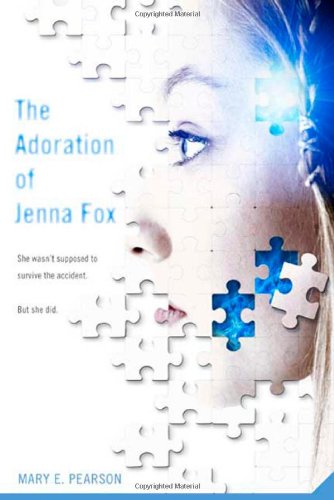
The Adoration of Jenna Fox

Jenna Fox doesn't remember anything. Jenna Fox was in a year-long coma. Jenna Fox wasn't supposed to survive, but she did.  Is Jenna Fox even Jenna Fox anymore?

        My latest reading adventure has been The Adoration of Jenna Fox. The novel is about Jenna Fox, a 17 year old girl who has just awakened from a year-long coma caused by a terrible car accident. She struggles to remember anything--she is completely blank. She can't even remember her parents--she just knows that they're her parents. That's about it. They have given her a selection of home videos from before her accident so that hopefully they will jog her memory and she will recover as quickly as possible. She and her family formerly lived in Boston, but have moved to a small town in California for reasons unknown until the middle of the book.
        Jenna struggles to find out who she really is and struggles to get to know herself. But, she tries to adjust to her new life in the best way she can. She ventures out into the open and meets some of her neighbors, much to her mother's and grandmother's discontent. She even starts going to school and makes new friends.
        One day, though, when Jenna is creeping around her new house, she cuts herself, and it's a very deep gash as well. She finds bizarre, blue gel underneath her skin and immediately confronts her Mom about it. Her mom quickly calls her dad over from Boston and they explain what the blue gel is for. Jenna learns the shocking truth about herself: she is artificial. The surgeons and doctors could only salvage 10 percent of her brain. According to her dad, that 10 percent is "the most important part". It turns out that the blue gel is actually not medically approved yet, and they used it on her anyways. So technically, she is illegal. After learning this, Jenna can barely stand the shock. She finds herself looking at the word thinking that she is "artificial", even though everything is the same as it was before she found all of this out.
  
       As a reader, I thought that this book was very monotonous at the beginning, but I continued reading it because I thought I should give it a chance. I have a habit of abandoning books based solely on first impressions, but I didn't want to do that this time. As I progressed deeper into the book, it got a lot more enjoyable and suspenseful, and now I'm enjoying reading it.
      I especially enjoy the author's (Mary E. Pearson) writing craft. She uses many different syntactical techniques in her writing. She clumps collections of short sentences together and sometimes she uses very long sentences. At the most dramatic points in the novel, the syntax helps make them even more dramatic. Since the book is first person, she also uses the right voice that a 17 year old would use.
     One of the main themes that I have taken away from the novel so far is that one doesn't always know themselves as well as they think they do. Once in a while, everybody should reflect on who they really are and what they really want, which is not always what everybody else wants. Everybody is their own, individual person and everyone should embrace that fact.
     I absolutely can't wait to see what happens next in the novel!

Sunday, February 9, 2014

Homeless Bird: A Book Review

What would it feel like to have to leave your family at 13 years old to get married? Even worse, to marry into a family with innumerable problems?

     The above are exactly what happen to Koly, the protagonist, in Homeless Bird by Gloria Whelan. As a reader, I thought that this book was very deep, but at the same time I could understand the story. Koly's journey throughout the novel is extremely emotional and the author, Gloria Whelan, makes sure that the reader feels those emotions along with Koly in order to better understand her as a character.
     The novel is brimming with twists at each turn of a page. I found myself gasping in shock often as I was reading. First, Koly finds out that her husband is severely ill and battling tuberculosis and that his family just married her in because they wanted money from her dowry to cure him. Then, her husband dies and she is left to deal with her husband's family, especially her cruel mother-in-law. Her mother-in-law reminded me of a cold-hearted, vicious snake. Next, her sister-in-law, who is her only morsel of happiness, gets married off to a handsome young man.

"As I watched Chandra and her bridegroom leave for his home, I felt my last bit of happiness disappearing."

     The line above is what Koly thought when her sister-in-law left, as she was left alone with her abusive, manipulative mother-in-law and her ailing father-in-law who eventually passes away as well. Koly's sass (mother-in-law), ends up abandoning her in a big city and Koly is left alone, as a "homeless bird." She goes through many rough patches; but learns many lessons and finally gets her happy ending through all of the misery. In fact, the last line of the book is, "Immediately I knew that it would be the homeless bird, flying at last to its home." In this line, Koly is referring to herself when she is about to go to her new husband's house.

    This novel taught me many lessons. The most important lesson--take life as it comes. It taught me that nothing is really in one's control as I was reading through the many hardships that Koly was forced to face unexpectedly. Even though she anticipated a perfect, married life; she got the exact opposite until the very end of the book.

   This book was set in India, so the author used many Indian terms throughout the course of the novel. Some examples are: "baap", "sass", "sari", and "namaskar". Since I am of Indian heritage, I enjoyed applying my knowledge to the book as I was reading it. I don't think that I would've gotten the same pleasure from the book had I not been able to interpret some of the vocabulary.

    Lastly, Homeless Bird really opened my eyes up to what used to go on in India and around the world in history. Women weren't treated well all over the world. This book definitely helped me envision the sad reality of the past as well-- women were not equal to men in almost any way. I believe that this was also one of the points that the author intended to make to the reader. Overall, I give this book 5/5 stars because of the marvelous plot and story line.

Wednesday, January 22, 2014

Delirium: About the Author

   As I mentioned in my previous post, the book I am currently reading is Delirium by Lauren Oliver. I grew curious of where Oliver gets her ideas for her novels if many of them have been New York Times bestsellers. I thought I should learn more about the author herself.

  Lauren Oliver was born in Queens, New York in 1982 and grew up in Westchester, New York. In fact, she got the inspiration for the setting in her novel, Before I Fall, from Westchester. With both of her parents being literature professors, she grew up in an environment where reading and writing were both highly encouraged hobbies, and soon enough, she developed a passion for them. She likes for her present-day house to be that way,too.

    When Oliver grew older, she attended University of Chicago and majored in philosophy and literature. She later went to NYU and attended the MFA program there for creative writing. After that, she started working in Penguin Books, and that is when she began working on her bestselling novel Before I Fall. She eventually left the company to pursue a career as a full-time writer.

    Going back to Delirium, Oliver says that she found some interesting things as she was writing the book. She says that when she was initially listing the symptoms of deliria nervosa, also known as the "love disease," she realized that love really did sound like a disease, making it even more fitting to be understood as one in the book. She also talks about how the audience for Delirium doesn't only have to be teens, and how it could be read by an older audience as well. According to her, adults are capable of having romantic anxieties just as much as teens, making them a suitable audience,too.

Check out more in the video below:


Wednesday, January 15, 2014

Delirium: Connection to Divergent and Matched

      I just recently began a new novel and I am completely addicted to it. It's called Delirium by Lauren Oliver. I am just 50 pages in, but I'll give you a brief synopsis of what I've read so far before I elaborate more into connections. The novel is set in the future and the main character, Lena Haloway lives in Portland, Oregon. She lives in a time where love for anybody, including her family, is forbidden and where love is considered to be a disease by the name of deliria nervosa. Everybody has to go through a procedure that prevents them from ever falling in love. Before that, though, they have to have an evaluation that determines who they will marry in their future, but not love.
      While I have been reading, I've noticed a connection to Divergent by Veronica Roth. The main connection is that the main characters in both novels seem to have similar personalities and thoughts. Another minor connection that I found in both novels was that both contain some sort of evaluation to open the novel. Lastly, they are both dystopian novels.
      I also noticed a connection to Matched by Ally Condie. Once again, Lena and Cassia, the protagonists in both novels, seem to have similar personalities and thoughts. The main connection, though, is that both novels have an evaluation to match one up with their future partner so that they'll have a good future. Matched is dystopian as well. 
      Finally, I have come to realize a popular trend in recent young adult/teen novels. Most recent novels are dystopian and take place in societies where there are bizarre restrictions and tests to determine one's future. Also, in many of these books, the world is at war. Delirium, Divergent, and Matched are just a few novels that exhibit at least one of these characteristics. I enjoy these novels, but I believe that there should be a variety in young adult books and not just one genre.

What do you think of the common trend in recent novels? Do you enjoy it or get bored of it?

Wednesday, January 8, 2014

The Perks of Being a Wallflower: Charlie's Characterization

   One of my latest reads has been The Perks of Being a Wallflower by Stephen Chbosky. The novel was wonderful. It was very heart-warming and emotional, but fun at the same time. The book is basically about how Charlie, the main character, is growing up, and his adventurous experiences throughout his journey. At the beginning of the novel, he is just beginning high school, and hasn't had many close friends in his entire life.
   Chbosky does an excellent job of developing Charlie's character in the novel. Charlie starts out as a lonely, 15 year old boy who is extremely anxious about starting high school. At the end of the novel, he is a completely transformed young man who has made friends and has had unique experiences.
    Charlie befriends two seniors named Sam and Patrick. He becomes very "tight" with them and their entire group of seniors. The group changes Charlie into a more friendly, cheerful person, but sometimes pressures him into doing not-so-great things. Charlie develops an unforgettable and unchanging bond with Sam and Patrick. He even has first experiences like a first date with a girl from the group and his first party. One of the biggest "firsts" though is falling in love for the first time. Charlie ultimately falls in love with Sam and experiences sorrow and jealousy as Sam already has a boyfriend. Sam eventually does like him back later on but he realizes he's not ready.
   When it comes time that Charlie's friends go to college, of course Charlie becomes upset and doesn't want them to leave, but he realizes that he will get  through and he will be fine, because he feels like he has changed for the better. As a reader, I felt that Charlie became a more complete person at the end of the novel and he was thoroughly developed as the novel progressed.